

10 Lawn Mowing tips for a Healthier, Greener Lawn 🌿
A healthy lawn starts with proper mowing. While feeding, weed control and watering all play an important role, regular mowing is one of the most effective ways to encourage a thick, healthy, green lawn.
Many lawn problems can be traced back to incorrect mowing practices. Cutting too short, mowing with blunt blades or removing too much grass at once can all place unnecessary stress on the lawn.
Here are our top lawn mowing tips to help keep your grass looking its best throughout the year.
1. Avoid Cutting the Grass Too Short
One of the most common mistakes homeowners make is cutting the lawn too short.
While it may seem like cutting lower means mowing less often, it can actually weaken the grass and encourage weeds, moss and drought stress.
As a general rule, never remove more than one-third of the grass blade in a single cut. During periods of hot or dry weather, raise the cutting height to help the lawn retain moisture and stay greener for longer.
2. Mow Little and Often
Regular mowing encourages the grass plant to produce side shoots, resulting in a thicker and denser lawn.
During the main growing season, lawns often benefit from being cut every 5–10 days depending on weather conditions and growth rates.
Frequent mowing helps create a smoother finish and reduces stress on the grass.
3. Keep Mower Blades Sharp
Sharp mower blades provide a clean cut and help the lawn recover quickly after mowing.
Blunt blades tear the grass rather than cutting it cleanly, leaving ragged edges that can turn brown and make the lawn appear unhealthy.
If you notice the tips of the grass looking frayed or discoloured after mowing, it may be time to sharpen or replace the blade.
4. Mow When the Grass is Dry
Whenever possible, avoid mowing wet grass.
Wet conditions can cause clumping, uneven cutting and blockages within the mower. It can also leave wheel marks and increase the risk of spreading lawn diseases.
For the best finish, wait until the lawn has dried before mowing.
5. Change Your Mowing Direction
Repeatedly mowing in the same direction can encourage the grass to lean and create uneven wear patterns.
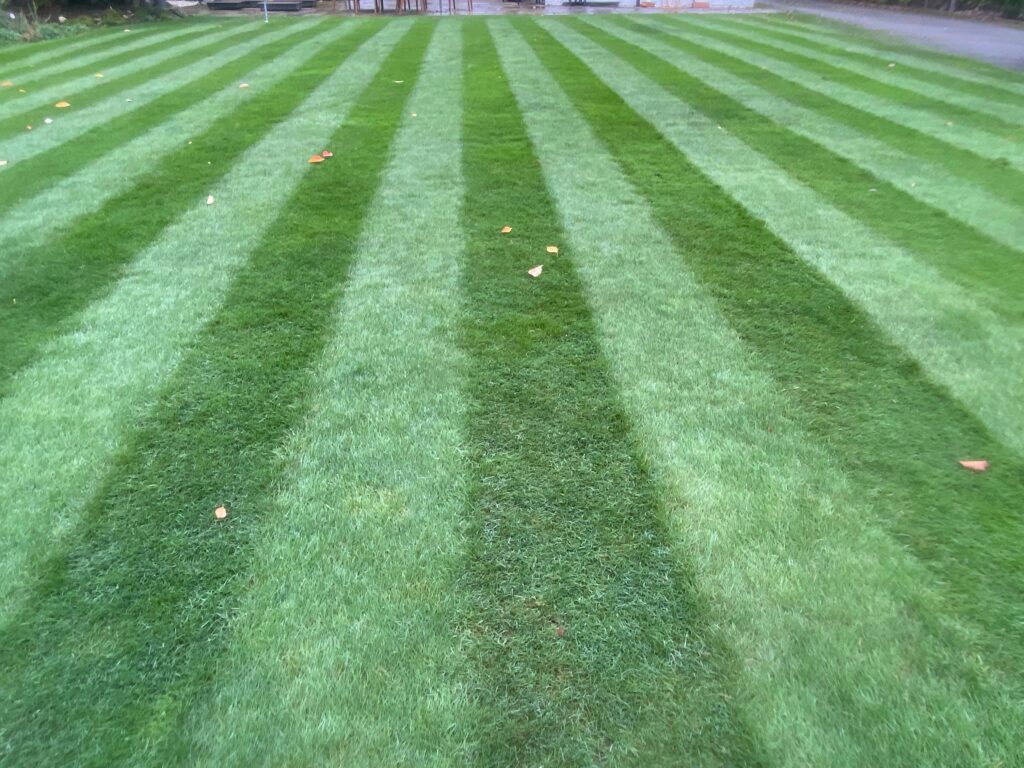
Alternating your mowing direction each time you cut helps the grass stand upright and produces a more attractive striped finish.
Try rotating between horizontal, vertical and diagonal mowing patterns throughout the season.
6. Leave the Grass Longer During Hot Weather
During periods of drought or prolonged sunshine, slightly raising your mower height can make a significant difference.
Longer grass blades provide additional shade to the soil, helping reduce moisture loss and protecting the lawn from heat stress.
Lawns that are cut too short often struggle more during dry summers and may take longer to recover.
7. Clear Debris Before Mowing
Before mowing, take a few moments to remove sticks, stones, toys and other debris from the lawn.
This helps protect both your mower and your lawn while reducing the risk of injury from objects being thrown by the mower blade.
8. Don’t Worry About Summer Dormancy
During prolonged dry periods, some lawns naturally turn brown and enter a temporary dormant state.
This is a natural survival mechanism and doesn’t necessarily mean the lawn is dead.
Once rainfall returns, most healthy lawns will recover and green up again. Avoid excessive mowing during these periods and raise the cutting height where possible.
9. Feed Your Lawn Regularly
Mowing and feeding go hand in hand.
Every time the lawn is cut, nutrients are removed from the grass plant. Regular professional lawn treatments help replace these nutrients and support healthy growth, colour and recovery.
A well-fed lawn is generally more resilient to drought, disease and wear.
10. Ask the Professionals
Even with good mowing practices, lawns can suffer from weeds, moss, compaction, poor drainage, pests and nutrient deficiencies.
Professional lawn care treatments can help identify underlying issues and keep your lawn looking its best throughout the year.
At My Lawn, we provide tailored lawn care programmes designed to improve lawn health, colour and overall appearance, helping homeowners enjoy a lawn they can be proud of.
For more lawn care advice or to arrange a free lawn survey, contact your local My Lawn specialist today or click on this link
You might also like…
10 Lawn Mowing tips for a Healthier, Greener Lawn 🌿
A good mow is the single most important means to a healthy Lawn. Here are some of the dos and donts to look out for: From spring through to the autumn cut your lawn weekly. Never cut more than a third off the grass when mowing as this can cause…
Watering Top Tips
Lawns love a good drink and in the height of summer your lawn can easily dry out. Thinner grass types have really struggled during the hotter months and often left scorched. In the dry weather you may need to water your lawn two or three time per week…
Winter Lawn Care: Everything You Need To Know
Caring for your lawn is a season-round job. It requires attention to keep it looking healthy despite the changing seasons. You might be concerned about how the colder months will affect your lawn. So, how do I care for my lawn this winter?